


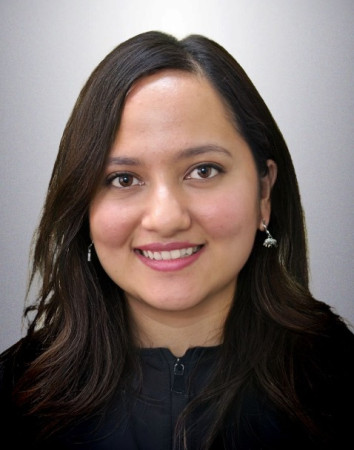
By: Dipika Khadka
"Will it feel real?"
"Can I go next?"
"What can you actually see inside?"
Those were the first questions I heard as a group of curious students gathered around us while we unpacked the Virtual Reality (VR) headsets.
Some watched quietly, trying to figure out how this unfamiliar technology worked. Others couldn't hide their excitement. They eagerly waited for their turn, eyes fixed on the headsets, imagining what kind of world they were about to step into. For most of them, it was their first time experiencing Virtual Reality.
For me, it was my first field visit as a Research Associate at NAXA. Neither of us knew that, within a few hours, a lesson about floods would become something far more memorable than a chapter in a textbook.
My First Field Experience
When I joined NAXA, I knew I would get opportunities to work with innovative technologies. What I didn't expect was how quickly my first field visit would change the way I think about education. As part of a VR-based climate education pilot in Bansgadhi Municipality, Bardiya, I wasn't there just to observe. I also had the opportunity to facilitate the sessions helping students wear the headsets, guiding them through the simulation, answering their endless questions, and simply watching their reactions.
Standing inside a classroom instead of behind a computer screen reminded me why fieldwork matters. You don't just see projects.You see people. You see excitement. You see curiosity. And sometimes, you witness learning happening right in front of your eyes. A School Already Preparing Students for the Future One thing immediately caught my attention when we arrived at Janapriya Secondary School.
The school itself reflected the values it was teaching. The campus was clean and green, plants surrounded different corners of the school, and students were already practicing environmentally friendly habits in their daily routines. Later, I learned that the school was part of the Blue School Initiative, implemented by Terre des hommes (Tdh) in partnership with GERUWA.
That explained a lot. Climate education wasn't new to these students. They already understood why protecting the environment matters. Our role wasn't to introduce the topic. Our role was to introduce a completely different way of experiencing it.
When the Classroom Disappeared
One by one, students put on the VR headset. The moment it covered their eyes, the classroom disappeared. Instead of sitting behind a desk, they suddenly found themselves inside a flood. Water surrounded them. They looked around. They moved. They explored. Most importantly, they had to make decisions.Should they evacuate now? What should they carry? Which direction was safest? Who should they help first? Unlike reading a story about floods, they were experiencing one. Every decision had consequences. Some students immediately realized they had made the wrong choice. Others discovered safer ways to respond. Without realizing it, they weren't simply learning about disaster preparedness. They were practicing it.
The Best Part Wasn't the Technology
I'll admit it.The VR headset is impressive. Watching students experience immersive technology for the first time is exciting. But as the day went on, I realized the headset wasn't the highlight. The students were. Some laughed as they reached toward virtual objects. Some jumped when the floodwaters rose around them. Others removed the headset and immediately started explaining the experience to their friends who hadn't yet tried it.
What surprised me most was how quickly they adapted. Most had never used Virtual Reality before. Within minutes, they were confidently navigating the virtual environment, helping each other, and asking thoughtful questions about floods, safety, and climate change.Children have an incredible ability to embrace the unfamiliar with curiosity rather than fear. Watching that unfold was genuinely inspiring.
Why Experiences Matter More Than Information
Climate change is one of the biggest challenges today's students will face. Yet, much of climate education still happens through textbooks, presentations, and awareness campaigns. These approaches are important. But they often remain abstract. Students know floods happen. They know disasters are dangerous. But very few have the opportunity to understand what making decisions during a flood actually feels like. That's where immersive technology changes everything. Virtual Reality turns learning into experience.
Instead of telling students what to do during a flood, it allows them to think, react, make mistakes, and learn from them all within a safe environment. That difference is powerful. People rarely remember every page they read. They almost always remember what they experience.
Beyond One Classroom
As the sessions continued, I found myself thinking beyond schools. What if community volunteers could practice emergency response before disasters happened? What if local governments used VR for evacuation planning? What if health workers rehearsed emergency situations without real-world risks?The possibilities suddenly felt much bigger than a classroom.
In a country like Nepal, where floods, landslides, and earthquakes affect thousands of people every year technology like this could become an important part of disaster preparedness. Not because technology replaces traditional training. But because it strengthens it.
One Thought I Brought Home
As we packed the equipment and prepared to leave Bardiya, one thought stayed with me. Technology doesn't change lives on its own. People do. Technology simply gives people new ways to learn, imagine, and prepare. That day reminded me that climate education shouldn't only teach students what disasters are. It should help them understand how to respond. Because awareness creates knowledge. Experience builds confidence. And confidence saves lives.
Sometimes, the most powerful classroom doesn't begin with a textbook. Sometimes, it begins with a single VR headset, a room full of curious students, and the chance to experience a lesson instead of simply reading about it.
About the Initiative
The VR-Based Flood Education pilot was developed under the Blue School Initiative, implemented by Terre des hommes (Tdh) in partnership with GERUWA. The initiative was co-designed by NAXA and the Climate Risk & Resilience (CRR) Lab to strengthen climate change awareness, disaster risk reduction (DRR), and flood preparedness among school students through immersive Virtual Reality learning.







Great job